If you are reading this blog, you probably already know that Christian Simpson (known as Peri Fractic on his Youtube channel) is acquiring the Commodore brand. However, it’s such huge news that I felt like a blog post was certainly justified, regardless of how well-known this is.
Take a look at their first advertisement:
You can review Christian’s first two videos about acquiring the Commodore trademarks on YouTube:
- Can We Save The COMMODORE Brand? My Biggest Project Yet
- We’re Bringing Back COMMODORE! • Let’s Buy Commodore Part 2
Actually rather than watching those videos you might read this article on Tedium and then this one for a good understanding of what is going on.
Suffice it to say that he and some partners are purchasing the Commodore trademark from its current owners, with the intent to reboot the Commodore brand. Their website is live.
I am going to organize a few of my thoughts in Q&A form, because these are the questions I have pondered for a few weeks before ultimately deciding I want to support the new Commodore company.
Is this new Commodore really Commodore?
Of course it’s not! But also, Yes!
I was initially very skeptical of this whole thing. After all, in 1994, Commodore ceased operations. And it didn’t just disappear. It was cut up into tiny pieces and sold off to the highest bidders and debtors. The various properties that Commodore owned were used by new companies. The companies that ended up owning the Commodore name and trademark slapped the logo on everything from paper shredders to mp3 players. The paper shredder thing is kinda poetic, since Commodore sold office equipment before they sold calculators. But the point is, a company doesn’t get any deader than Commodore got.
But, once you see who is working in this new Commodore, it’s hard to say it doesn’t have a legitimate claim to be Commodore. They own all the relevant trademarks and have Commodore company OGs on board. Even the guy who designed the Commodore 128, Bil Herd, is involved. The father of the C64 itself, Al Charpentier, is on-board.
But more than that, the vision Christian has for the company really is a Commodore vision.
So of course it’s Commodore.
Is this new Commodore 64 Ultimate really a Commodore 64?
Of course it isn’t. Also, yes, it definitely is!
The new Commodore 64 Ultimate is not the same thing I got in 1984. It can’t be that. If you want that, go to eBay. That’s the only place you are likely to find a “real” Commodore 64. Just be prepared to spend a lot of time and money making it work in a modern setting. And be sure to source a new power supply, because the old ones are sure to eventually fry your investment. And figure out storage and how you are going to get software on it. And how you’re going to hook it up to a modern TV. And…
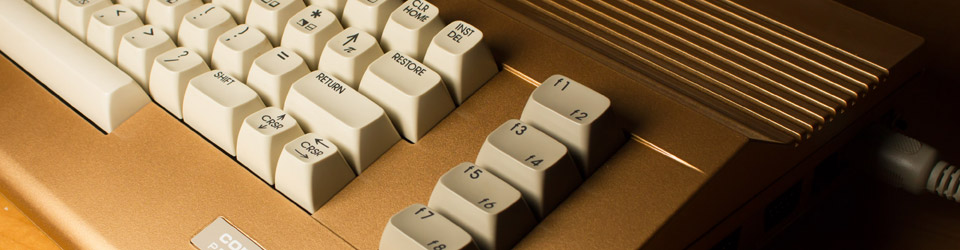
The 64 Ultimate doesn’t have those problems, and it embodies everything that was good about that computer made “for the masses, not the classes.” It’s near-perfect FPGA implementation of the Commodore 64 hardware will run 99.99% or better of the Commodore 64 software base and you would not tell the difference between that and the “real deal.” It supports most Commodore 64 compatible peripherals, including disk drives and joysticks. It comes with a proper Commodore 64 keyboard layout, unlike using your PC’s keyboard in an emulator, and unlike an emulator, the 64 Ultimate suffers no input lag.
Importantly, it is complete and approachable. It is what was promising about computers in the 1980s: it was there to serve you. It was not a collection of software designed to addict you and make you someone’s product. It was for you to have fun with. It was for you to learn with.
This new Commodore 64 is the Commodore 64. But even better.
Okay, so what is their first Commodore 64 computer, really?
Put simply, it is a Commodore 64 based on Gideon’s Ultimate 64, but you don’t need to source parts from three or more different hobbyists who may or may not have them in stock and which might have to come from three different places. And it costs the same as just the main board Gideon is selling. The pricing is astonishingly reasonable, and you could not do better on your own.
I know this product well because I basically built one myself.
Based on what I have read elsewhere, this will get a touch of usability improvement too. I think Christian understands that these devices can be made easier, more approachable. I love my Ultimate 64 Elite, but if you are not already a Commodore enthusiast with a working knowledge of how things are meant to be done, the menu is nigh inscrutable. Christian is having some “polish” added in that area that will not matter to people like me, but will make a huge difference to someone who hasn’t kept on with Commodore non-stop since the early 80s.
Okay then, who is it for? What is the vision?
I was initially very skeptical when I first heard this was happening. But as I dug in, I realized what Christian’s goal is here. You can see it in his videos. He is trying to make tangible the feeling of the technology of the 80s. In the 80s, home computers were full of promise and wonder. They were devices for us to use for our own ends. They were for us to have fun with, and to learn with.
Today’s technology enslaves us. We can’t get away from our phones, not because we are using them for our own ends, but because they are using us to make us the product someone else sells. I think Christian’s vision is to give people something that embodies the wonder and opportunity that Commodore brought to the masses with its affordable computers, without the incumbent poison of modern technology, all wrapped up in a nice bow of glowing nostalgia.
Rewatch the video at the top of this post. If you’re reading this post here, you probably don’t need to be sold on, or even reminded of, how wonderful the Commodore 64 was — no — is. But how many people who don’t have time to tinker with every little setting and have no real connection to “the scene” might want to re-experience the joy of having such a wonderful device, just once again? I don’t know the answer to this question, but however many they are, Christian seems to see that they can be reached and included.
Some may object that we already have easy devices that people can get; they can even get many of the old games they remember on their phone. Maybe. But those solutions are missing too much to interest me, and just don’t feel right. What the new Commodore is offering can easily reach “the masses” again and still satisfy all the needs of a hardcore enthusiast like myself. The 64 Ultimate is open-ended. It’s not just a collection of a few games. That may be enough, and there’s nothing wrong with it. But what about when you want to program that BASIC thing you did when you were a kid?
10 PRINT "BRANDON RULES"
20 GOTO 10
And what if you want to try your hand at assembly, because you never managed to get around to it? It’s all possible, you won’t be blocked from going as far as you want, and you can start easy with a simple game of Impossible Mission and go on from there.
I can’t speak for the new Commodore, but that’s what I think the vision is. And I’m right there with it.
Will it work?
I don’t know. Christian shared in his video that he has personally leveraged his own home to make this happen, and that he’s not the only one. That is not a risk I would take, because I can’t help but question whether or not there exists a large enough market for these products. But if anyone can see this through, I think Christian can.
More, I want him to succeed. Look, we’re not going to replace PCs or smartphones with new implementations of the Commodore 8-bit or 16-bit computers. But even Nintendo’s new gaming products, which in the past have seemed family-safe and friendly, are poisoned with constant pushes to get online and connected. We need something that doesn’t seek to trap and enslave us. We need an alternative.
I’ve placed a pre-order for the 64 Ultimate. For one thing, I’d like it in my collection of Commodore computers. But beyond that, I want to see this reboot of Commodore succeed.
Update: After posting this, I realized that where I speculate about Christian’s vision for Commodore, I was actually honing in on the aspects of that vision, as I saw it, that helped me ultimately move to a position of unqualified support of this rebooted company. Christian has a more broad goal for Commodore than just that. You can read the actual stated vision for Commodore here.